 Psychology Notes
What Is Mental Imagery?
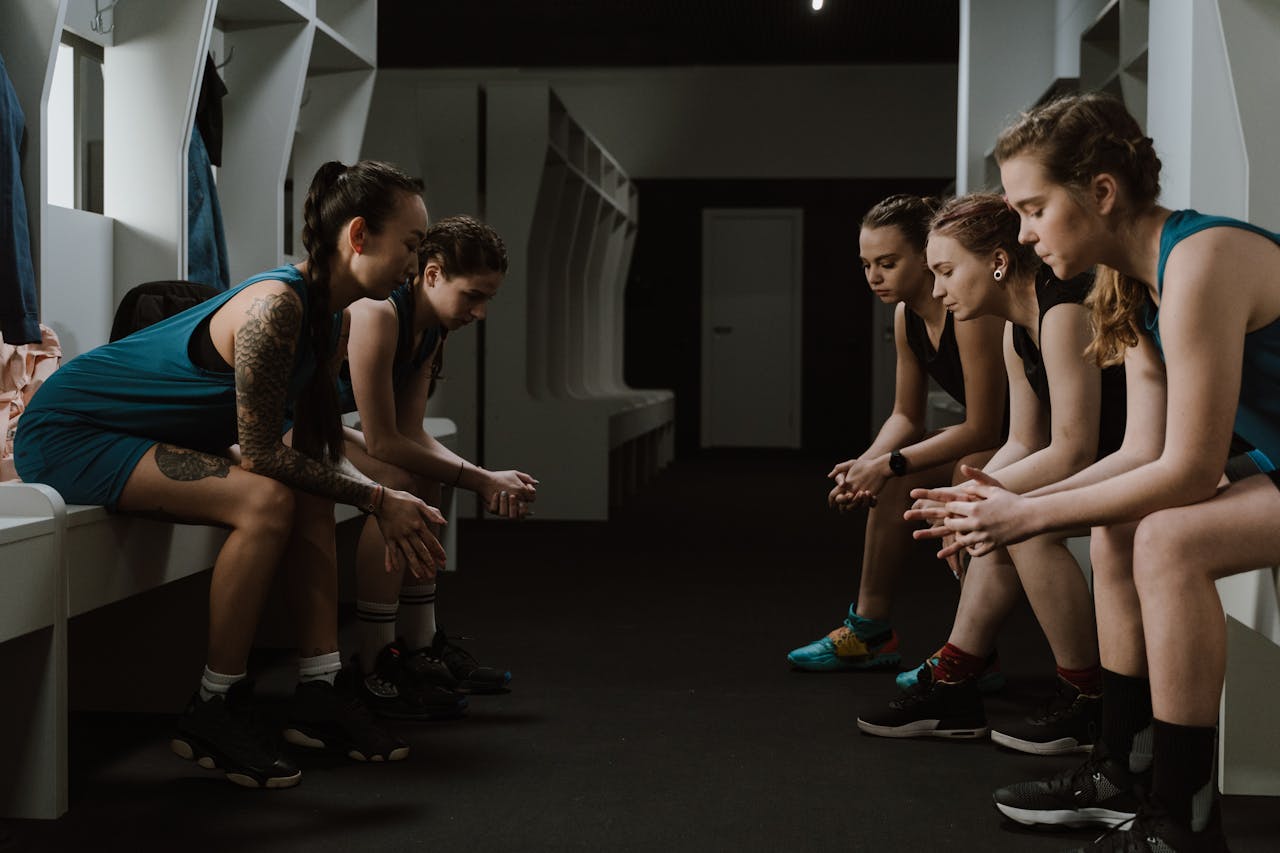
Mental imagery — often called visualization — is the deliberate creation of a sensory experience in the mind in the absence of external stimuli. In sport, it typically involves mentally rehearsing performance: seeing yourself execute a skill, feeling the movement, hearing the environment.
The term “visualization” is somewhat misleading — effective imagery is multisensory. It includes:
- Visual — seeing the performance from a first-person or third-person perspective
- Kinesthetic — feeling the movement, the physical sensations, the muscle activation
- Auditory — hearing the sounds of the environment
- Emotional — experiencing the feelings associated with the performance
Research consistently shows that athletes who incorporate mental imagery into their preparation perform better than those who do not — and that imagery combined with physical practice produces better outcomes than physical practice alone.
Why Imagery Works: The Neural Basis
Mental imagery activates many of the same neural pathways as physical execution. Brain imaging studies show that imagining a movement activates the motor cortex, cerebellum, and supplementary motor areas in patterns that overlap significantly with actual movement.
This is sometimes called the functional equivalence hypothesis: mental imagery is functionally equivalent to physical practice in its effects on the neural representations that underlie skilled performance.
The implication is significant: mental practice is not merely psychological preparation. It is a form of practice that builds and reinforces the neurological structures of skill.
The PETTLEP Model
The most influential evidence-based framework for imagery in sport is the PETTLEP model, developed by Holmes and Collins. It holds that imagery is most effective when it closely matches the functional characteristics of the actual performance.
PETTLEP stands for:
| Element | Description |
|---|---|
| Physical | Adopt a physical position similar to the actual performance; hold equipment if appropriate |
| Environment | Conduct imagery in the actual performance environment, or a realistic representation |
| Task | Imagery content should match the specific task being performed |
| Timing | Real-time imagery is typically more effective than fast-forwarded replay |
| Learning | Imagery content should evolve as skill develops |
| Emotion | Include the emotional experience associated with performance |
| Perspective | Use the perspective most natural to the individual (internal first-person is often most effective for kinesthetic tasks) |
Research testing PETTLEP-based imagery consistently finds it more effective than generic visualization.
Uses of Imagery in Sport
Skill Acquisition and Refinement
Mentally rehearsing a movement — particularly when physical practice is limited (injury, travel, off-season) — maintains and improves the neural representation of the skill.
Pre-Competition Preparation
Mentally rehearsing a successful performance before competition activates readiness, builds confidence, and primes the motor patterns needed for execution.
Strategy and Scenario Planning
Imagining specific competitive scenarios — and one’s effective response to them — prepares the athlete for situations that may arise, reducing reaction time and uncertainty.
Coping with Adversity
Rehearsing how to respond to setbacks (an early mistake, adverse conditions, a strong opponent) builds psychological resilience and reduces the disruptive impact of those events.
Rehabilitation
Athletes recovering from injury use imagery to maintain neural pathways, sustain motivation, and preserve the psychological relationship with their sport during periods of physical inactivity.
Internal vs. External Perspective
Imagery can be performed from two perspectives:
Internal (first-person): Seeing and feeling the performance as if through your own eyes — as you would actually experience it. Generally more effective for skill execution, particularly for kinesthetic tasks.
External (third-person): Watching yourself perform as if on video — from outside. Useful for form correction, tactic review, and observing overall movement patterns.
Most athletes use both perspectives; the choice depends on the purpose of the imagery session.
Common Mistakes and How to Avoid Them
Imaging failure: Some athletes inadvertently rehearse errors or negative outcomes. If images of failure arise, immediately interrupt and replace with the desired successful performance. Imagery of failure strengthens the neural pathways for failure.
Generic or vague imagery: “I see myself playing well” produces less benefit than specific, vivid, multi-sensory imagery of a particular skill or scenario. Specificity is essential.
Skipping the emotions: Imagery without emotional engagement has reduced impact. The emotional arousal associated with competition should be part of the imagery experience.
Irregular practice: Like physical skills, imagery benefits from regular practice. Short, frequent sessions (5–10 minutes) are more effective than occasional long sessions.
Implementing an Imagery Program
- Start with a brief relaxation — imagery is more vivid and controllable in a calm state
- Choose a specific scene — a skill, a competitive scenario, or a pre-performance routine
- Make it multisensory — engage visual, kinesthetic, auditory, and emotional channels
- Use real time — match the pace of the imagery to actual performance duration
- End with success — always conclude imagery sessions with a successful execution
- Practice regularly — 5–10 minutes daily produces consistent benefits over time